When the Harvest Table Stopped Following the Calendar
The late-summer supper began as a practical response to a crowded field. Across much of the temperate United States, tomatoes, sweet corn, stone fruit, late beans, and summer squash can mature during the same stretch of weeks. Households cooked that overlap while it was still sound. The market basket carried the field’s timing into the kitchen.
Refrigerated transport, storage, and year-round grocery supply eventually loosened that bond. We can buy summer-shaped produce long after the local season has passed. A harvest supper has therefore become a chosen practice, one that reconnects seasonal eating with the condition of food in front of us.
Three Moves Carry the Meal
For a busy cook, three decisions matter: buy what is ripe today, build one flexible three-course meal from the basket, and assign scraps and surplus a kitchen use before they reach the bin. The order follows perishability. Fragrant peaches, split tomatoes, and tender herbs speak first; firm squash and corn can wait behind them.
In a late-summer basket, that plays out simply: stem-scented fruit sets the menu, firm corn and squash carry the pan, and cobs, cores, and bruised pieces receive timed second uses.

How to Fill the Basket When Tomatoes, Corn, and Stone Fruit Peak Together
Read the stall before writing the menu. A seasonal guide can point toward crops commonly abundant now; the USDA SNAP-Ed seasonal produce guide offers that broad frame. Peak dates still shift with latitude, elevation, weather, and local growing practices, so the guide cannot tell you whether this morning’s peach is ready.
Use Scent, Weight, and Surface
I start with aroma because ripe stone fruit often announces itself near the stem. A peach or plum intended for tonight should smell distinctly sweet at room temperature and yield slightly under gentle pressure. Firmer fruit belongs in the basket only when a later meal already claims it.
Lift tomatoes one at a time. They should feel substantial for their size, without active leakage. A dry, healed crack across the shoulder is usually a trimming matter. Seepage, mold, or a fermented odor signals deterioration.
- Corn: Choose snug husks with silk that remains damp rather than brittle. Leave the ears unshucked until cooking.
- Summer squash: Look for glossy skin and a firm body that has not begun to collapse near the stem.
- Basil: Check the tips and inner leaves for blackening. Tender stems can stand in water away from direct sun until the meal begins.
Pack for the Walk Home
Give fragile produce physical space. Corn and squash form the basket’s lower structure; tomatoes sit above them, with peaches, plums, and basil placed last. An overripe peach trapped beneath an ear of corn can turn mindful sourcing into instant waste.
Let the basket change when the stall changes. If plums carry the strongest scent, take them instead of peaches. If the tomatoes are leaking while the corn is tight-husked and fresh, allow corn to lead the meal. Reading the stall preserves choice without forcing disappointing produce into a list written earlier.
A Starter, a Main, and a Sweet That Follow Whatever Came Home
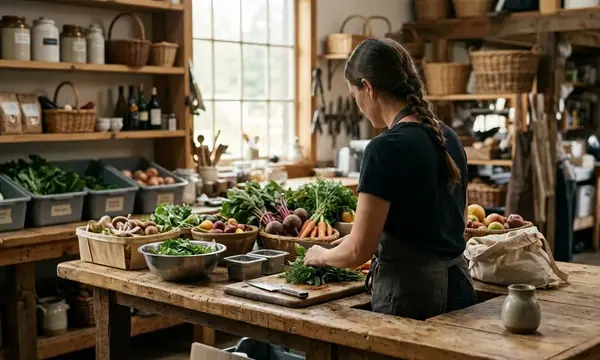
Unpack everything before naming the courses. Place the softest fruit, juiciest tomato, and most delicate herbs together on the cutting board. Those ingredients need the earliest attention, so one of them should direct the starter or dessert.
Build the Courses in Order
- Starter: Slice tomatoes with peaches or plums, then season them with salt, oil, and an acid already in the cupboard. Alternatively, cut raw corn from the cob and toss it with torn herbs. Let salted tomatoes stand while the pan heats so their released juice becomes the dressing. Add basil just before serving.
- Main: Spread firm squash, beans, corn, and sound tomato pieces across one sheet pan or skillet. Begin with the sturdy vegetables; add kernels and very ripe tomatoes near the end so they retain moisture. Spoon the vegetables over cooked grain or toasted bread, then add beans, eggs, cheese, or another protein already in the kitchen.
- Sweet: Slice fragrant fruit and let it rest with a little sugar and acid, or place firmer halves in the warm pan after the main comes out. Serve the fruit with its own juices. A spoonful of cheese or another familiar accompaniment can come from the refrigerator, but the fruit remains the point.

Keep the Tools Few
One cutting board and one pan are enough for this sequence. Cut the fruit and raw starter components first, move them to serving dishes, and then prepare the vegetables. That order keeps kitchen rituals calm and prevents a flexible menu from growing into a sink full of equipment.
Let Ripeness Lead
If a tomato must be eaten tonight, place it in the first course. If the peaches are softer, let them close the meal. The most fragile ingredient receives the clearest job.
Stems, Cobs, Peels, and the Extra Pound You Could Not Leave Behind
Assign second uses while clearing the cutting board. Waiting until after dinner allows tiredness to make the decision, and exposed produce deteriorates quickly.
Jobs for Tonight
- Put stripped corn cobs directly into a saucepan, cover them with water, and simmer gently into a light broth. Cool and refrigerate it promptly.
- Place clean tomato cores and herb stems into vinegar for a refrigerated infusion. Fresh herbs may also scent oil, provided the oil goes straight into the refrigerator and is used promptly rather than stored at room temperature.
- Chop bruised or overripe fruit into a skillet with a small amount of sugar and lemon juice. Cook until spoonable, then treat it as a refrigerated spread rather than a shelf-stable preserve.
Jobs for Morning
Sound roasted vegetables can become lunch over grain or toast. Extra fruit can be cut, frozen in a single layer, and transferred to a dated container once firm. Return remaining corn, cut produce, broth, and cooked vegetables to cold storage promptly after the meal.
Sunday Surplus
The usual source of waste is the second impulse purchase, not the peel. Before adding another pound, name its destination: tonight’s supper, tomorrow morning, or the freezer. If none has room for it, leave it at the stall.
Setting the Table as a Small Act of Abundance
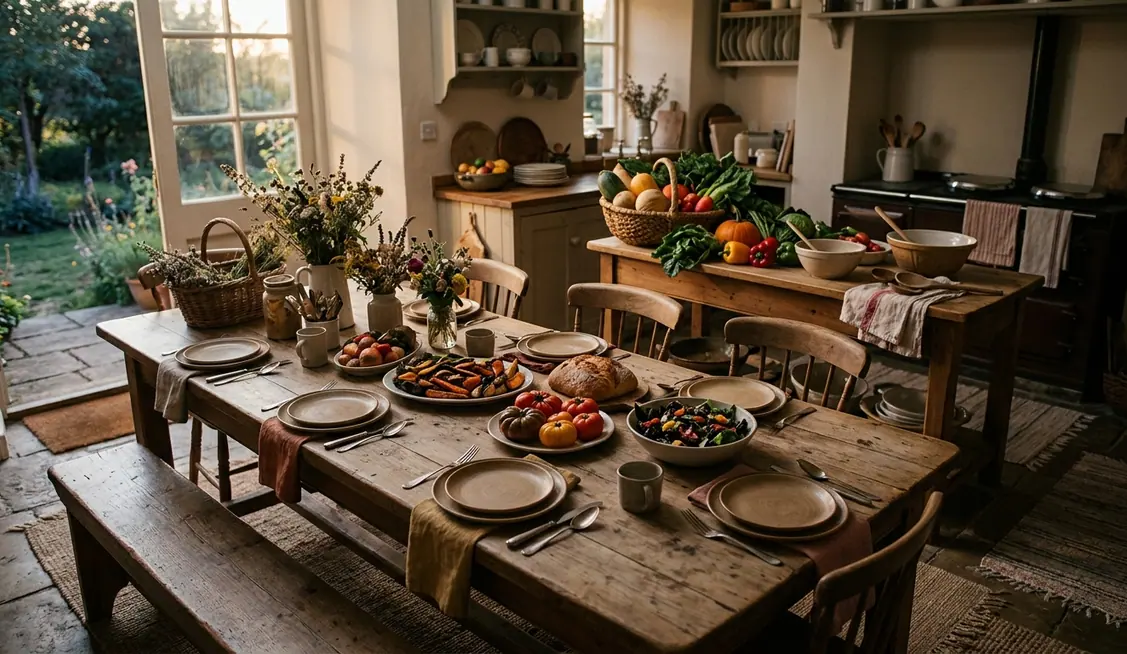
Once the food is cooking, return the emptied market basket to the table. Fill it with the sound squash, fruit, or corn that did not enter the meal. Add one candle or a garden cutting already in the house, keeping leaves and flame clear of the serving platters.
A Pause for Peak Week
Use the linen and stoneware that serve an ordinary weeknight. There is no need for disposable décor, printed place cards, or flowers purchased for a photograph. During the final minutes of cooking, the basket itself becomes the centerpiece and a visible reminder to return uncooked produce to storage afterward.
Before eating, pause long enough for someone to name the ingredient at its peak or thank the people who grew and cooked the food. The words can remain plain. This small kitchen ritual locates wellness within attention rather than performance.
The One Decision Left After the Basket Is Home
The method fits into a single breath: cook the ripest food first, let it direct a starter-main-sweet supper, and give every usable cob, stem, trimming, or surplus piece a destination. Make that judgment while unpacking, before fragile fruit and herbs disappear into storage and lose their claim on dinner.
Which single item in tonight’s basket will you let set the rest of the menu?