Key Takeaways
Start with seasonal awareness rooted in historical market cycles. Prepare targeted questions about growing practices. Prioritize relationship building over quick transactions.
I check what is actually in season first, then prepare questions, then build vendor familiarity, and finally judge produce with the senses. A practical pre-market scan takes 10-15 minutes: check a regional extension harvest calendar, review the market's current vendor list, and write a few crop-specific questions before leaving home.
Origins of the Modern Farmers Market
Farmers markets evolved from ancient barter systems to community hubs. They revived in the 1970s as a response to industrial food chains. The emphasis today stays on direct grower-to-consumer connections.
Direct grower-to-consumer trade has documented roots in open-air markets and civic marketplaces where perishable goods were exchanged daily or weekly before refrigeration and long-distance trucking became standard. In the United States, federal support for direct agricultural marketing was formalized in the 1970s through legislation encouraging farmer-to-consumer sales, aligning with renewed interest in local food systems during that decade.
Problem: long supply chains dull flavor and nutrition. Solution: return to the stall for mindful sourcing that supports wellness and seasonal eating.
Prepare Your Approach Before Arriving
Research seasonal availability in your region. List specific questions about soil and harvest timing. Bring reusable bags and a notebook for notes.
Decide what kind of trip you are making before arrival: a pantry restock, a meal-planning walk, or a relationship-building visit. Pack two sturdy reusable bags, one rigid container for berries or tomatoes, a small notebook or phone note, cash in small bills if the market is small, and a cooler with an ice pack if the trip home will run past half an hour or so in warm weather.
Prepare a handful of targeted questions: 'When was this harvested?', 'Was it grown in the field, greenhouse, or high tunnel?', 'Do you use compost, mulch, cover crops, or crop rotation?', and 'What will be at peak flavor next market day?'
Ask the Right Questions and Build Connections
Inquire about growing methods without confrontation. Return to the same vendors to foster ongoing dialogue. Learn about harvest dates to time your visits.
A useful opening script is: 'I'm learning how to shop more seasonally. What was harvested most recently this week?' This invites a specific answer without sounding like an inspection. Relationship tracking can be simple: record vendor name, crop purchased, harvest date if shared, price unit, flavor notes, and what the grower said would improve over the next week or two.
Select the Most Vibrant Ingredients
Use sight and touch to assess ripeness and quality. Choose items at peak freshness for maximum flavor. Plan meals around what is available that day.
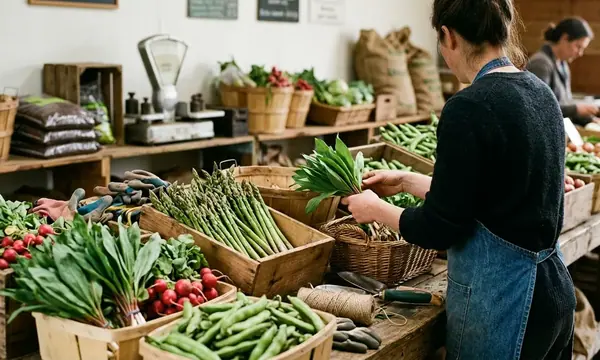
Leafy greens should look crisp at the stem end, not translucent or slimy; carrots and radishes should feel firm; tomatoes should feel heavy for their size and give slightly at the shoulders; berries should be dry, fragrant, and free of leaking juice in the bottom of the container. For peak freshness, buy tender herbs, greens, berries, and cut flowers early in the market window; roots, winter squash, onions, garlic, dried beans, and storage apples tolerate later purchase better.
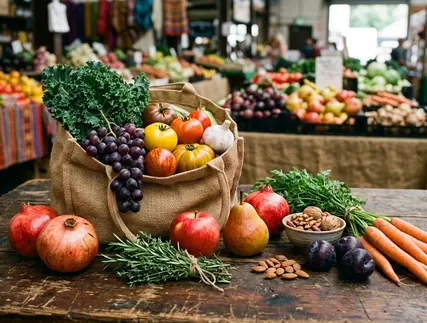
Important: Tactile checks should be gentle and should follow the vendor's handling rules, especially for bruisable fruit such as peaches, figs, berries, and ripe tomatoes.
Commit to One Vendor Relationship This Season
Focus depth over breadth for meaningful sourcing. Track seasonal changes through consistent visits.
A realistic commitment is four to six visits across one growing season, spaced one to three weeks apart, with notes on what appeared, what disappeared, and which crops tasted best at each visit. For a warm, wellness-oriented closing action, suggest choosing one anchor vendor for a single category such as greens, eggs, herbs, fruit, or storage vegetables rather than trying to evaluate the entire market at once.
Field Note: A tomato that is deep red but cold, watery, and odorless may have been picked before peak flavor or stored poorly, so color alone is not enough.
Bottom Line: Pick the greens grower whose spinach you liked in April, go back in June for their tomatoes, and by October you will know exactly whose storage squash to reach for through winter. That one steady relationship teaches you more than a dozen scattered stalls ever will.