When Weeknight Kitchens Lost Their Hush
Evening cooking once followed the remaining daylight. That rhythm narrowed as several changes converged: electric ranges entered homes unevenly from the early twentieth century onward, packaged convenience foods expanded from the 1920s through the 1950s, and later commuting and dual-earner schedules pushed dinner work into the hours after work.
The weeknight kitchen became a race against the clock. Steam, citrus aroma, the drag of a spoon through warm grain, and the first sound of onions in a pan began to register as delays rather than parts of dinner.
Four small practices can restore some quiet without requiring a new meal plan: sensory cues, prepared components, grounding prompts, and a few familiar tools kept ready. For the next three cooking nights, choose two or three practices rather than attempting every one. A useful measure of success is a calmer first 10 minutes and a clear point when the kitchen closes.
A Smaller Aim
The goal is an evening with a recognizable beginning and end. A longer recipe or redesigned room adds work where the cook needs relief.
Sensory Cues That Soften the Room Before the Pan Heats
Begin with the first automatic movement through the kitchen. Setting down a bag can pair with switching on a warm lamp. If the refrigerator opens first, reach for a lemon. Filling a pot cues the kettle. Attaching the cue to an existing action keeps it from becoming another chore.
Light Before Chopping
Replace the overhead glare with one warm lamp before taking out the food. A single beeswax tea light can also mark the transition, provided it stands on a stable, cleared surface away from towels, loose sleeves, and packaging.
Clear Flame Zone
Keep any candle within sight and extinguish it before leaving the room. Hang a clean, dry cloth within reach, replacing it whenever it becomes damp or touches raw-food residue.
Lemon, Rosemary, or Oil
Halve a lemon, bruise a rosemary sprig, or pour the first teaspoon or tablespoon of olive oil at the board. Each action takes roughly 10 to 30 seconds. The scent shifts the room from leftover workday air toward dinner before the burner contributes any aroma.

One Song as a Start Bell
Choose one song lasting about three to five minutes. Put the kettle on when it starts. By the final note, water should be heating and the skillet or stored grain should be in position. The song gives the opening interval a boundary without adding another timer.
Prep Shortcuts That Buy Back the Evening
Useful advance preparation begins with recurrence. Prepare only the components that will appear across the next several dinners, date each container, and place it at eye level. Forgotten jars create clutter; visible ingredients become meals.
Prepare the First Aromatics
Chop enough onion and garlic for the next two or three dinners. Refrigerate them promptly in a clean, covered container labeled with the preparation date. Then the first weeknight movement becomes heating fat and adding aromatics rather than peeling, chopping, and wiping away papery skins.
Cool the Dinner Base
When a pot of grain or beans is already cooking, make enough for later meals. Transfer the cooked food to shallow containers and refrigerate it within two hours. Keep the refrigerator at 40°F or below, use refrigerated portions within three to four days, or freeze them.
This method suits an after-work kitchen working with roughly one pot, one skillet, and one board. Larger households may need extra batches and more shallow containers so food cools safely.
Follow the Same Opening Order
- Minutes 0–2: Fill the pot and retrieve the stored grain or beans.
- Minutes 2–5: Start the skillet and wash the greens.
- Minutes 5–10: Warm the grain and begin cooking the vegetables.
Water, grain, skillet, greens. A tired cook can follow that rail without negotiating with every jar in the refrigerator.
Two-Meal Sauce
Mix roughly one cup of tahini-lemon sauce, yogurt-herb dressing, or vinaigrette only after assigning it to at least two meals during the next three to four days.
Reheat leftovers with a small splash of water or oil, stirring as needed, until the food reaches 165°F. That step protects both texture and food safety while bringing yesterday’s grain back into the evening.
Grounding Prompts to Keep Beside the Stove
Prompts work best when they occupy pauses already built into cooking. Select one physical prompt and one boundary prompt. Four instructions on a card can quickly feel like another recipe.
Let the Burner Wait
While a pan warms over low heat or the sink fills, plant both feet on the floor and take three unhurried breaths over about 15 to 30 seconds. Keep attention in the kitchen. The burner performs the waiting.
Name the Three Anchors
After retrieving the ingredients, say the meal aloud in one plain sentence: “farro, greens, lemon.” Naming its three anchors gives the plate a center and discourages the late addition of unrelated jars, garnishes, and side dishes.
Ask for Steadiness
One question is enough: What would feel steady in the body tonight? The answer may lead toward beans and greens, or toward toast, eggs, and dressed leaves. Nutrition becomes easier to read when hunger receives one clear question.
- Write no more than four prompts on an index-size card.
- Keep the card in the utensil crock rather than loose on the counter.
- Choose a closing time 30 to 60 minutes after starting.
- Include eating, storing leftovers, wiping the board, and lowering the lights within that boundary.
A kettle whistle can serve as the sole reminder for cooks who prefer an uncluttered counter.
The Few Tools Worth Leaving Out on the Counter
Counter space should follow repeated use. A tool earns a permanent position when it shortens the path from ingredient to heat and can be cleaned immediately. No purchase is assumed; the strongest setup often comes directly from the drawer.
Build Around Four Motions
- Seasoning: Keep a small salt cellar beside the stove, outside the direct steam and splatter zone. Pinch with clean, dry fingers.
- Cutting: Leave out one small board for routine produce preparation. After raw meat touches it, wash it in hot, soapy water before preparing ready-to-eat ingredients.
- Stirring: Choose one favorite wooden spoon that can be washed and returned immediately.
- Cooking: For one or two servings, a 2- to 3-quart pot and a 10- to 12-inch skillet commonly handle grain reheating, eggs, onions, and wilted greens.
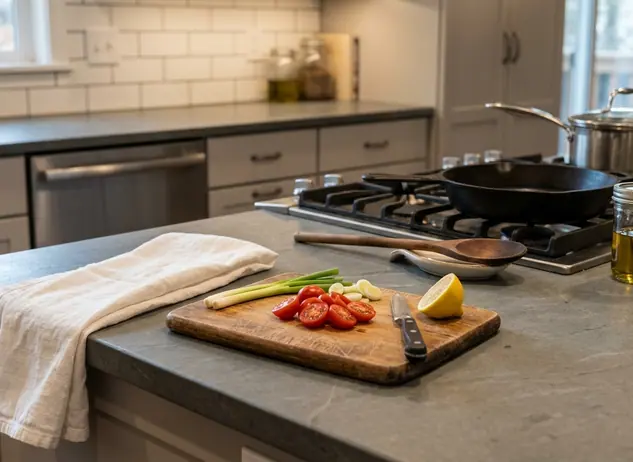
Group olive oil, one lemon, and a pepper mill within an arm’s reach of the main preparation area. Leave gadgets requiring charging, attachments, or cupboard unpacking elsewhere. The counter stays a working surface for the everyday rituals of cooking, not a storage shelf.
Counter Test
Keep an item out when it is used regularly, ready immediately, and easy to clean before the kitchen closes.
Tuesday, 6:42 p.m.: Lemon Oil on a Warm Pan
The following scene is a transparent composite, built to show the sequence rather than present a testimonial.
At 6:42 p.m., rain darkens the window of a small apartment kitchen. She leaves her coat on a chair and turns on one lamp instead of the overhead light.
From 6:43 to 6:46, she fills the kettle, retrieves farro cooked within the previous three days, and sets the container beside the stove. A lemon opens beneath the knife. Olive oil warms in the skillet, and the clean scent reaches the room before the greens leave their bag.
Between 6:47 and 6:53, a splash of water loosens the farro as it reheats. Market greens strike the warm oil and fold down against the pan. She adds salt with dry fingers, turns the spoon once more, and finishes the bowl with lemon and pepper.
At 6:54, she says, “farro, greens, lemon.” She wipes the small board, returns the grain container to the refrigerator, and lowers the heat. By 6:58, the one pot, one skillet, and one board are finished with their work.
She carries the bowl to the table and sits while the tea light burns lower. Rain continues against the glass. After the last sip from the kettle, she extinguishes the flame, lowers the lamp, and closes the kitchen.