What a First-Frost Pairing Actually Is
A first-frost pairing brings together two or three principal ingredients around a hardy vegetable whose flavor has shifted with cold weather. Think sweet parsnip beside tart apple, with thyme carrying the aroma. Three decisions make the plate work: let one cold-sweetened vegetable lead, meet its sweetness with acid or bitterness, and use moderate heat so its sugars brown without scorching.
Let Sweetness Lead
Choose one sweet vegetable, give it a sharp or bitter companion, and cook gently enough to control the browning. Oil, salt, spices, and finishing vinegar support the pairing without competing for attention.
The first local killing frost marks a useful seasonal shopping window, though cold acclimation can change hardy vegetables before that date. A frosty morning alone cannot establish how sweet a particular carrot will taste. This approach suits the weeks when suitable field crops and stored produce share the market table.
I start with the ingredient that will carry the meal. Once that choice is clear, the remaining decisions become smaller: which companion supplies contrast, and which cooking method preserves it? For roasting, 375°F offers a practical moderate temperature; tenderness and browned edges determine when the food is ready.
Roots, Brassicas, and Fruit That Shift After Frost
The first-frost basket has a field-to-storage boundary. Kale and parsnips may change with cold in the ground, while kabocha and pears accompany them from storage without needing to freeze. Keeping that distinction clear makes seasonal eating more useful than a general promise of sweeter produce.
- Hardy greens and brassicas: kale, collards, Brussels sprouts, and cabbage provide leafy or bitter contrast, sometimes alongside cold-season sweetness.
- Roots: carrots, parsnips, and beets can anchor the plate.
- Alliums: leeks supply a mellow aromatic base when gently cooked.
- Storage companions: winter squash, apples, and pears bring sweetness, acidity, or a soft texture according to variety and condition.
Cold can shift carbohydrate storage toward soluble sugars in hardy crops. Modest water loss during storage can also concentrate flavor, but that is a separate process. Squash and storage fruit reflect their variety, ripeness, curing, and storage conditions; exposure to a hard freeze is no prerequisite for their place here.
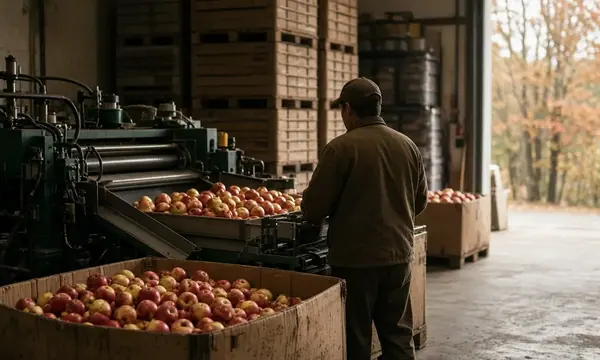
At the market, ask which roots and brassicas were harvested after cold weather and which squash and fruit came from storage. Seasonal labels alone do not answer those questions. Tender herbs and summer fruit generally leave the local outdoor harvest around this time, while greens differ in their response to cold.
Mindful sourcing begins with what is still being harvested or already stored. Build dinner from that supply before reaching for an out-of-season substitute.
Soup Pairings That Keep Frost Sweetness Intact
Parsnip–apple soup breaks down into three decisions: parsnip supplies the cold-season sweetness, tart apple supplies the counterpoint, and a gentle simmer preserves control before the final acid adjustment. That is enough structure to guide the whole pot.
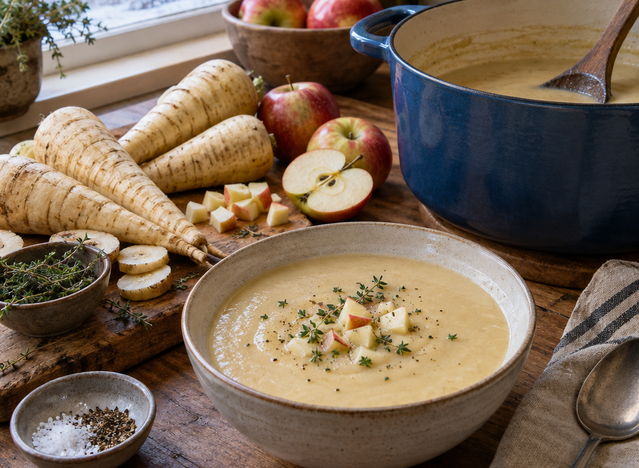
Keep these four matches close to the stove:
- Parsnip with tart apple and thyme.
- Leek and potato finished with sage.
- Carrot with orange peel and cumin.
- Kabocha with ginger.
Build the Parsnip Pot
- Soften the aromatic base. Sweat sliced onion or leek in oil over medium-low heat for 6–10 minutes, stirring until soft without dark browning. Salt lightly.
- Add the main ingredients. Cut the roots into roughly 1-inch pieces, then add them with the apple, thyme, and cooking liquid.
- Keep the simmer gentle. Check the roots with a knife during the 15–25-minute cooking window. Stop when they are just tender; peeled kabocha may soften sooner.
- Choose the texture. Leave the soup chunky or blend it smooth, then taste before making the final seasoning adjustment.
For carrot soup, use a strip of orange zest with little white pith and remove it before blending. In every version, add acid at the end. Begin with 1 teaspoon of cider vinegar or lemon juice per 4 cups of soup, stir, and taste. Tart apple may already provide enough contrast.
If the soup tastes candy-sweet, adjust the acid gradually. If it tastes too salty, remember that evaporation concentrates both salt and sweetness; seasoning lightly at the start leaves room to finish carefully.
Grain Bowls Anchored by One Frost-Sweet Vegetable
A grain bowl becomes easier to balance when one roasted vegetable leads. The grain supplies chew, leaves bring contrast, and the dressing carries sharpness through the bowl. Five competing roasted vegetables can blur that arrangement.
Use the same build order each time: grain, one roasted lead vegetable, one bitter or leafy contrast, one crunch, and one acid.
- Beet and barley: farro or barley, roasted beets, shredded cabbage, walnuts, and a sharp vinegar.
- Squash and brown rice: brown rice, roasted squash, lentils, kale, toasted pumpkin seeds, and lemon.
- Brussels sprouts and apple: warm grains, mustard-dressed roasted Brussels sprouts, thinly sliced tart apple, and walnuts. The sprouts supply the leafy-bitter contrast.
For two or three bowls, roast 1–1½ pounds of the chosen vegetable on a rimmed 13-by-18-inch sheet pan. Leave visible gaps between pieces. Beet pieces cut roughly ¾ inch across take approximately 35–50 minutes at 375°F; turn once and test for tenderness.
Dress Every Spoonful
Toss enough dressing through the grains and vegetables that sweet, sharp, and chewy meet in the same bite. Separate decorative piles make that balance harder to taste.
This is a practical expression of mindful eating: notice the mouthful, then adjust the bowl. Nutrition and everyday wellness have a place in ordinary kitchen rituals, including making a satisfying lunch from vegetables and grains already on hand.
Sheet-Pan Roasts and the Desserts in the Same Bag
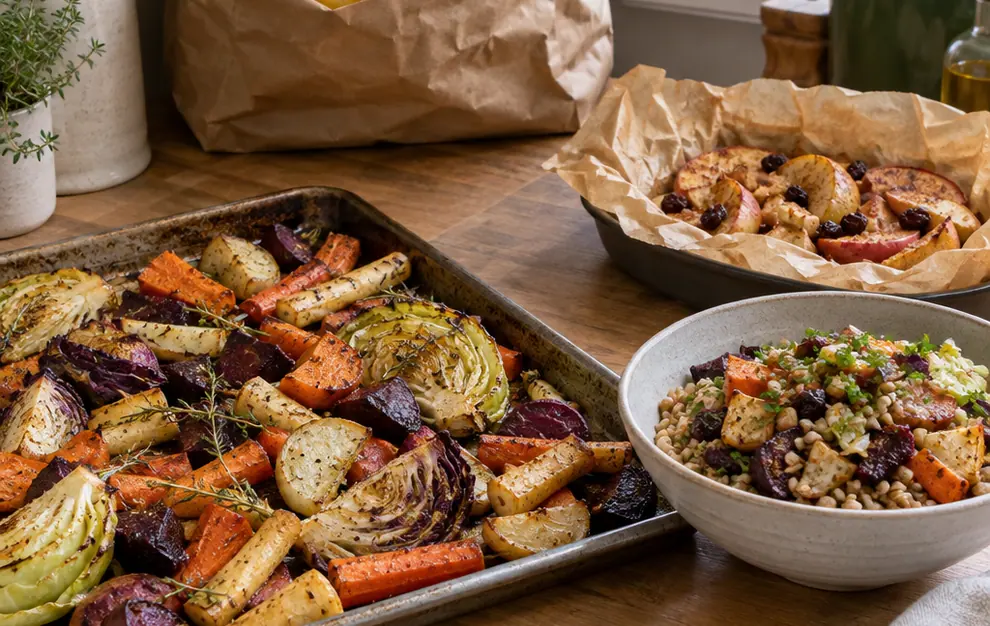
A bag of roots, cabbage, and storage fruit can supply both the savory plate and a simple dessert. The shared technique is straightforward: moderate heat, space on the pan, and a short rest before serving.
Give Cabbage Its Own Contact
Heat the oven to 375°F. Toss carrots and parsnips cut into roughly ½-inch-thick batons with onion wedges, oil, and salt. Roast for 35–45 minutes, turning the roots once. Add cabbage wedges about 1 inch thick for the final 20–25 minutes, placing a cut surface against the pan.
Keep gaps around the cabbage rather than piling it over the roots. Aim for dark, browned edges and a tender center; heavy charring can overwhelm the sweetness you want to preserve.
For dessert, bake cored apple halves with an oat-and-butter filling for 30–45 minutes at 375°F. Alternatively, roast pear halves with cinnamon or ginger for 25–35 minutes, until a knife enters easily. Squash wedges take roughly 35–50 minutes to become spoon-tender. Taste the squash before adding honey.
Rest roasted vegetables and fruit for 5 minutes so their juices settle and they become easier to handle. That pause also gives the cook time to finish the grains or dress the greens.
Save Tomorrow's Bowl
Refrigerate leftovers within 2 hours in shallow containers and use them within 3–4 days. Reserve a portion for the next day's grain bowl before serving the rest.
Cook One Three-Ingredient Frost Plate This Week
Buy or pull one root, one brassica, and one storage fruit: parsnip or carrot, kale or cabbage, and apple or pear. For a concrete starting point, use parsnip, kale, and apple.
- Roast ½-inch-thick parsnip batons with oil and salt at 375°F for 30–40 minutes, turning once.
- Add ½-inch-thick apple wedges to a clear area of the same pan for the final 12–15 minutes. Serve them alongside the root or separately as a small dessert.
- Wilt sliced kale in a skillet with a little oil and water for 4–6 minutes, then season with salt and cider vinegar.
The next day, fold the reserved parsnip, kale, and apple into grains already on hand, keeping the same sweet-sharp balance without another shopping trip.
Put parsnip, kale, and a tart apple on this week's shopping list, then roast the parsnip first and build tonight's plate around it.