What's Inside
- Key Takeaways
- The Morning Ritual That Wins by Slowing Down
- Choose Herbs That Match the Day You Want
- Prepare Cup, Water, and Space Before the Kettle Sings
- Pour With Attention, Then Let the Steep Do the Work
- Set One Intention While the Infusion Steeps
- Run the Full Ceremony in One Clean Sequence
- Do This Tonight So Tomorrow's Ceremony Happens
Key Takeaways
- A short herbal tea ceremony can create more calm and focus than a morning crowded with messages, packing, planning, and caffeine consumed on the move.
- Choose an herb for the quality you want to emphasize that day: calm, clarity, or gentle warmth.
- The essential tools are one cup, a loose-herb strainer or infuser, one herb jar, a kettle, and a timer.
- Attentive pouring and a phone-free steep carry more weight than decorative or expensive teaware.
- A leaf or flower ceremony can fit into 6–10 minutes, including water heating, steeping, the first sip, and a brief close.
The practice comes down to five decisions: prepare the tools, select an herb, pour attentively, hold one intention during the steep, and close with the first sip. Repeating that sequence turns an ordinary cup into a dependable morning marker.
The Morning Ritual That Wins by Slowing Down
The first cup often becomes a delivery system. Water heats while messages open. The tea steeps while a bag gets packed. By the time the cup reaches the table, attention has already scattered across the day.
A ceremony protects one uninterrupted sensory sequence: herb, water, pour, aroma, intention, sip. Its strength comes from continuity. Each action leads cleanly into the next, giving the mind fewer places to run.
This is why a brief tea practice can ground a morning more reliably than a stack of productivity habits. The cup asks for a small span of presence before the day's demands begin. Place the phone outside arm's reach or turn on a focus setting before pouring. The attentive portion can remain under ten minutes when the chosen herb has a 3–6-minute infusion window.
Protect The Pause
Checking a notification during the steep breaks the sensory sequence at its most useful point. Silence alerts before the kettle starts, then leave the phone untouched until after the first sip.
The ceremony is a positive practice of presence rather than a luxury added to an already full routine. Herb, water, cup, and attention are enough.
Choose Herbs That Match the Day You Want
Begin with the day ahead. Which quality would help you meet it well?
For a gentle morning, chamomile or lemon balm can signal calm. Peppermint offers a bright, cooling profile when clarity matters, while a light rosemary infusion brings a more assertive aroma. Fresh ginger or cinnamon bark supplies warmth for mornings that call for a steadier, more grounding cup.
Keep Early Blends Readable
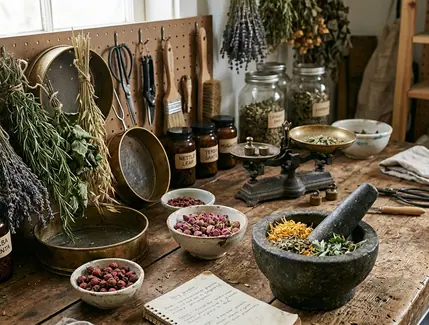
Use a single herb or a two-herb blend for the first few ceremonies. Simplicity makes aroma, flavor, and personal response easier to recognize. A crowded mixture can blur those signals before you have learned what each plant contributes.
Begin with 1–2 teaspoons of dried culinary-grade leaves or flowers per 240 milliliters of water. Assertive rosemary can start near 1 teaspoon. For fresh ginger, use 3–5 thin slices.
I prefer to choose the desired tone first and open the herb jar second. That order keeps seasonal eating and wellness intentions connected to the actual day rather than to a fixed trend.
Store for Aroma
Keep dried herbs in labeled, airtight jars away from stove heat, direct sunlight, and moisture from the sink. Check leafy herbs after 6–12 months and roots or bark after 12–24 months. Replace them earlier when the aroma has become faint, dusty, or musty.
Herb Boundaries
Pregnancy, breastfeeding, prescription medicines, reflux, ragweed-family allergy, and known herb sensitivities can change which plants are appropriate. Keep quantities culinary and ask a qualified clinician or pharmacist about a specific herb when one of these factors applies. The NCCIH herb fact sheets offer a useful starting point for checking individual plants.
Prepare Cup, Water, and Space Before the Kettle Sings
A stable setting reduces small morning negotiations. Clear a patch of counter or table measuring roughly 30 by 30 centimeters. That is sufficient for a cup, infuser, herb jar, and spoon.
Arrange the objects in the order you will touch them. Place the herb beside the dry infuser, the infuser beside the cup, and the kettle within an easy reach. This simple layout gives the kitchen ritual a visible beginning.
Choose a Cup by Feel
Select one cup or bowl that feels secure when warm. Weight, handle shape, and the sensation of heat through the vessel matter more than appearance. Leave enough headspace to carry the drink without tightening your grip.
A heavy cup may draw heat from the infusion. Pre-warm it with hot water for 30–60 seconds, empty it, and then add the infuser.
Read the Water
For most culinary leaves and flowers, heat the water until steam rises steadily and small bubbles begin to appear, roughly 93–100 degrees Celsius at sea level. Remove the kettle from the heat at that point.
High-altitude water boils below 100 degrees Celsius. Expect a lighter cup or extend the steep rather than forcing every herb into a single temperature rule. Roots and bark also require a different rhythm from delicate leaves, often needing a 10–15-minute extraction.
Pour With Attention, Then Let the Steep Do the Work
Pour in a narrow, controlled stream. Watch the water strike the herbs, listen as the cup fills, and pause once the plant material is fully wet. Then finish filling and start the timer immediately.
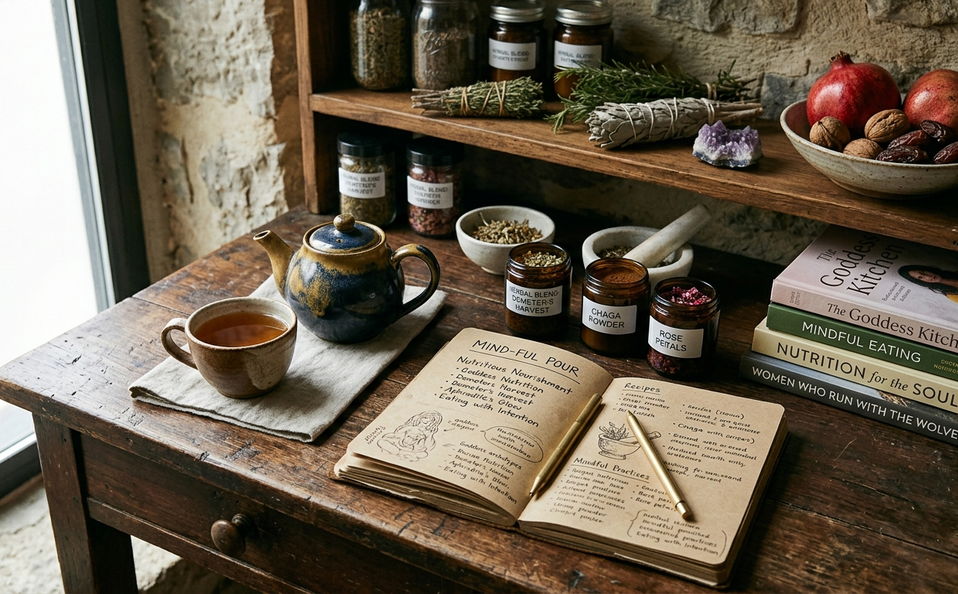
Cover the cup when possible to retain its aromatic compounds. During a 4–6-minute leaf steep, keep your hands still and your attention on the cup for at least the first 2–3 minutes. Watch the leaves shift. Notice the first clear thread of aroma. Let the kettle and spoon remain where they are.
Use the Herb's Pace
- Peppermint: steep for 3–5 minutes.
- Lemon balm or chamomile: steep for 5–7 minutes.
- Light rosemary infusion: steep for 5–8 minutes.
- Fresh ginger slices or cinnamon bark: allow 10–15 minutes for a fuller cup.
Remove the herbs when the planned steep ends. Leaving chamomile, peppermint, or rosemary in the cup throughout breakfast can create an increasingly bitter or medicinal taste. If bitterness appears, take out the infuser instead of repeatedly diluting the tea.
Flavor Stays Legible
A timer supports mindful sourcing and preparation because it lets the character of the herb remain clear. Set it at the pour, then return your eyes to the cup rather than watching the countdown.
Set One Intention While the Infusion Steeps
An intention is a short, present-tense direction for how you want to move through one part of the day. It should name an action or quality you can recognize when the relevant moment arrives.
Choose one situation likely to shape the day and form a sentence of roughly 5–12 words. Useful prompt stems include:
- “Today I meet uncertainty with patience.”
- “I protect one block of deep work.”
- “I speak kindly under pressure.”
Make the phrase during the 3–7-minute steep and repeat it once. More repetition can turn the practice into mental noise. One clear sentence is enough.
Anchor Words to Sensation
Pair the intention with a physical cue. Let the phrase arrive as the aroma reaches your nose or as the cup warms both palms. That sensory link gives the intention a place in the body and makes it easier to recall later.
After removing the infuser, take the first sip within 30–60 seconds. Notice temperature first, then aroma and flavor. The sip closes the period of stillness and carries the chosen direction into the next action.
Run the Full Ceremony in One Clean Sequence
A fixed order keeps the practice workable on an ordinary weekday. The full arc can remain near 6–10 minutes because setup and water heating overlap.
- Clear and enter the space. Silence notifications and give yourself 30–60 seconds to clear the spot and choose the herb.
- Measure the herb. Place 1–2 teaspoons of a chosen leaf or flower into the infuser.
- Heat the water. Allow 2–4 minutes, arranging the cup and timer while the kettle heats.
- Pour attentively. Wet all the herbs, pause, then finish filling the cup over 20–30 seconds.
- Set one intention. Form a short, present-tense phrase tied to the day ahead.
- Steep in stillness. Give a leaf or flower infusion 3–6 minutes when that window suits the chosen herb. Keep the phone untouched.
- Take the first sip. Register the warmth, aroma, and flavor before moving on.
- Close the ceremony. Remove and rinse the infuser, allowing 30–60 seconds for the first sip and close.
Two Flexible Versions
For travel, brew in a lidded infuser mug and remove the infuser before sealing the lid. This prevents the tea from becoming harsh while you commute.
In a shared household, reserve a predictable 8–10-minute window and keep every tool on one small tray. A quiet corner can belong to several people when its timing and footprint remain clear.
Sequence Over Ornament
The payoff comes from preserving the order: clear, choose, heat, pour, state, remain still, taste, rinse. A plain cup handled with attention serves the ceremony fully.
Do This Tonight So Tomorrow's Ceremony Happens
Tomorrow's practice begins with tonight's arrangement. In 1–2 minutes, place one cup, a dry infuser, and a closed jar of your chosen herb in the ceremony spot. Confirm that the kettle contains enough fresh water and set it within reach.
Choose one prompt before bed, such as “Today I meet ___ with patience.” Leave the blank open for the situation that feels most immediate on waking.
Set a phone focus window for 8–10 minutes after you rise. This removes the most common interruption before it can enter the room.
Tonight, stage the cup, infuser, herb jar, and kettle together, then complete one phone-free steep before any other morning task.