The Three Decisions That Define a Midday Stop
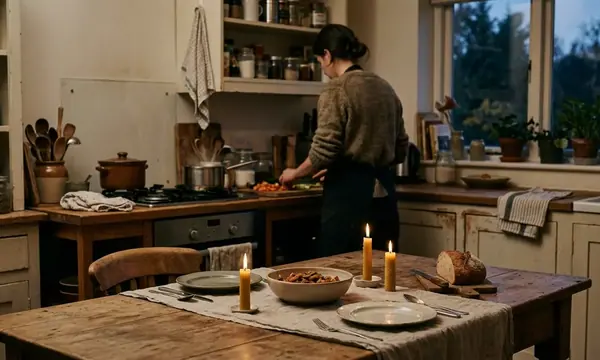
A weekday lunch is often assembled in a kitchen that still holds breakfast dishes and eaten within reach of an unlocked laptop. The available 5-to-20-minute lunch window slips by while the mind remains tethered to morning tasks, meaning the body never receives a clear midday stop. A stressful day requires three specific actions to break this momentum: a plate built from what is already in the kitchen, a brief breath before the first bite, and eating with the screen off.
Establishing this boundary does not require an hour of free time or a complex recipe. The practice starts by identifying the decisions that create a recognizable break. What comes next moves from kitchen assembly through the return to work: a leftover plate formula, a countertop breathing cue, sensory prompts that keep the phone down, the common traps that undo the pause, and a copyable Tuesday bowl for the busiest afternoons.
Assembling a Grounding Bowl From Kitchen Leftovers
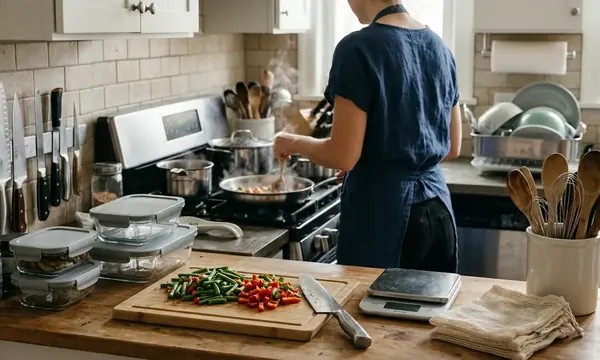
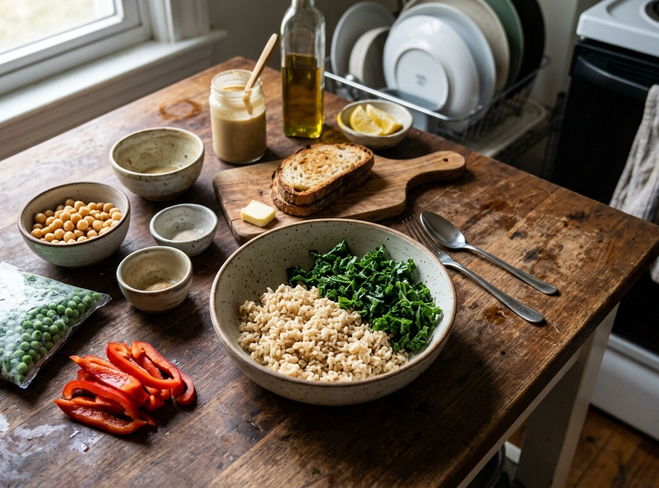
When the afternoon is already loud, lunch assembly needs to rely on a flexible formula rather than a rigid diet rule. Building a meal from five basic kitchen categories ensures substance and contrast without requiring a trip to the store. The foundation requires a pile of plant color, which can be raw greens, leftover cooked vegetables, or fruit. Next comes a grain or starch, such as rice, bread, leftover pasta, potato, or farro. A protein follows, utilizing beans, eggs, yogurt, tofu, or leftover fish or chicken. Fat is then added to carry flavor, using olive oil, nuts, cheese, or avocado. Finally, a bright finish completes the bowl with lemon, a pickle, fresh herbs, or a spoonful of yogurt.
The assembly order matters just as much as the ingredients. Grain goes down first because it forms the base. The protein is added next, followed by the plants on top. Fat is drizzled over the components to carry the flavor downward, and the bright finish is applied last so the very first bite is vibrant. This sequence can easily happen while leftovers warm, generally within a 5-to-10-minute kitchen window.
Kitchen Strategy: Empty-Fridge Swaps
A chaotic afternoon demands flexibility. When the primary ingredients are missing, simple substitutions keep the formula usable. Canned chickpeas easily replace cooked beans. A piece of toasted bread stands in for leftover grains. Frozen peas can be quickly thawed to substitute for fresh salad greens. While resources like the USDA MyPlate serve as a broad home-plate map for general nutrition, this specific lunch formula focuses on immediate, practical assembly from whatever is currently available.
The Countertop Pause Between Assembly and Eating
Placing a breathing exercise in the middle of a busy workday often feels like adding another task to an overflowing calendar. Attaching the breath to a reliable physical transition makes it a natural kitchen cue instead. The ideal moment occurs after the plate is finished, but before sitting down to eat. Both feet meet the floor, the eyes stay open and directed at the food, and each nasal inhale is followed by a deliberately longer exhale before the bowl ever leaves the counter.
A body still braced from morning meetings does not automatically meet lunch as a resting point. Completing three to five breathing rounds with the eyes open and focused on the steam, the lemon, or the color of the greens provides a physical signal. Allowing roughly 30 to 90 seconds between finishing the plate and taking the first bite, with the exhale longer than the inhale, is a simple way to tell the meal it may begin.
Grounding Cue: The Physical Transition
This breathing step acts as a mealtime settling cue rather than a clinical anxiety treatment. The round count is a practice instruction to help shift focus. Keeping the eyes open anchors the mind to the immediate environment, preventing a drift back into work-related thoughts before the meal has even started.
Physical Boundaries for a Screen-Free Lunch Window
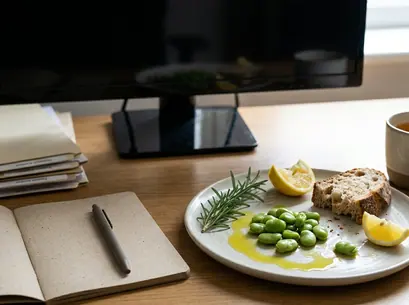
A vague intention to be more mindful rarely survives a stressful day. Screen separation must be made physical and specific. The phone goes face-down in another room or inside a bag. Then the laptop closes entirely, and notifications are left alone for the length of the meal. That unlocked-laptop boundary is strict: lunch begins only after the phone leaves the room, the laptop closes, and the countertop breaths occur.
Once seated, attention moves through a short sensory order so the meal has observable cues. During the first three to five bites, identify the food's temperature. Notice the smell of the lemon or the olive oil. Find one crunchy or soft texture, and name one visible color on the plate. Running these prompts in order while chewing keeps the mind engaged with the physical reality of the food.
This practice remains realistic even for a short lunch window. Keeping screens away for the full 5-to-20-minute meal creates a distinct boundary. Even a few unhurried bites with the screen away still count toward the goal of a clear stop. A poured glass of water or a switched-on kettle marks the end of the break without requiring the phone to be used as a clock.
Recovering the Meal When the Inbox Pulls You Back
The busiest afternoons present specific traps that undo the midday pause. These are not generic productivity sins, but physical missteps in the lunch routine. Eating over an open inbox is the most common default. Standing at the counter while scrolling prevents the body from registering the meal. Building a plate of only greens and skipping fat or protein ensures hunger returns long before the next call. Treating the breath as optional means sitting down already braced for the next crisis.
Recovery happens at the point of drift rather than after lunch is over. If the phone is already in hand, put it in another room and take one longer exhale over the bowl. When the meal consists only of starch, add fat or protein. A plate of only greens needs both. Fast additions include a spoonful of yogurt, a handful of nuts, a slice of cheese, or a heavy drizzle of olive oil.
Midday Adjustment: The Starch-Only Trap
The reset can be made mid-meal in 30 to 60 seconds—set down the utensil, relocate the phone, add one available component, and take one extended exhale. The tone of this adjustment should remain practical and unashamed. The redirect itself is the entire point of the practice.
A Complete Walkthrough for a Meeting-Heavy Tuesday
On a meeting-heavy Tuesday, the available ingredients determine the bowl. The kitchen holds leftover farro in the fridge, a tin of chickpeas, a handful of greens, a cucumber, a lemon, olive oil, and a spoonful of yogurt. The assembly happens while the farro warms and before the next call begins.
First, rinse the greens and set them aside. Warm the leftover farro, as it forms the base of the meal. Tip the chickpeas into the bowl next for protein. Add the greens and the sliced cucumber above the base layers. Dress the entire bowl with olive oil to carry the flavor, and squeeze the lemon over the top for brightness. Place the spoonful of yogurt at the edge of the bowl.
With the food assembled, pour a glass of water. Leave the phone in the bedroom. Stand at the counter, place both feet on the floor, and complete three longer exhales with eyes resting on the steam rising from the farro. Sit down at the table with the laptop closed. Name the temperature of the first bite and the scent of the lemon. Eat the meal, finish the glass of water, and only then reopen the laptop.