What's Inside
- Attaching attention to ordinary meal preparation
- Using sight, sound, touch, smell, and taste safely
- Choosing one familiar tool as a ritual object
- Keeping physical cues near the cutting board
- Matching one small ritual to tonight's menu
- Following the method through an ordinary lentil dinner
Presence Lives in the Prep You Already Do
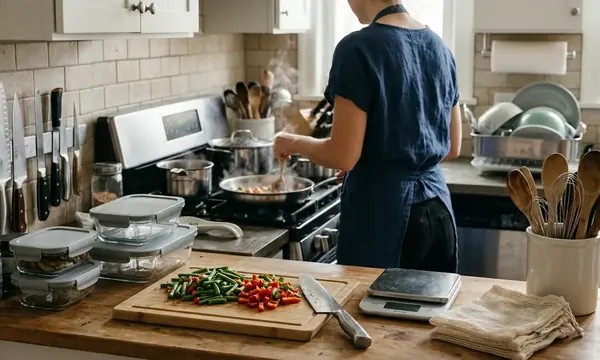
Presence at the stove begins by giving chopping, stirring, and seasoning a job for the senses. It does not require a longer recipe, a silent room, or a separate meditation before dinner.
Three decisions carry the practice. Give the current task one sensory focus. Handle one familiar tool deliberately. Keep one physical cue beside the board. Together, these choices attach attention to motions the meal already requires.
The distinction matters on a weeknight. A cook may have lentils approaching a simmer, an onion waiting under the knife, and dishes still in the sink. Adding another routine creates another demand. Watching the first onion layers separate simply gives the eyes somewhere precise to rest while the onion gets chopped.
Keep the first moment small
Choose one sensory channel for the first 5 to 15 seconds of a task, then continue at a normal pace. Sight might follow the onion's layers. Sound might follow the simmer. Smell might follow spice blooming in oil.
The cue can be chosen while setting out the knife and board, within the existing 20-to-60-second counter setup. No additional mise en place is needed. Chopping remains chopping; attention enters through the first few motions.
Weeknight Boundary
If the cue cannot live beside the knife, inside the stir, or within the salt check, it has grown beyond this tiny meal-prep ritual.
Give Chopping, Stirring, and Seasoning a Sensory Job
A useful sensory job has a clear object and a short duration. “Pay attention” leaves the mind searching. “Watch the blade clear the guiding knuckles for the first few cuts” gives it a concrete assignment.
At the knife: choose sight, sound, or touch
With a yellow onion, a cook can watch the curved layers open through the first 3 to 6 cuts. Another option is to hear each clean contact between knife and board. A third is to feel the blade settle before beginning the next stroke.
Only one signal is needed. Following every sound, texture, and movement at once can divide attention during the part of cooking that requires the clearest handling.
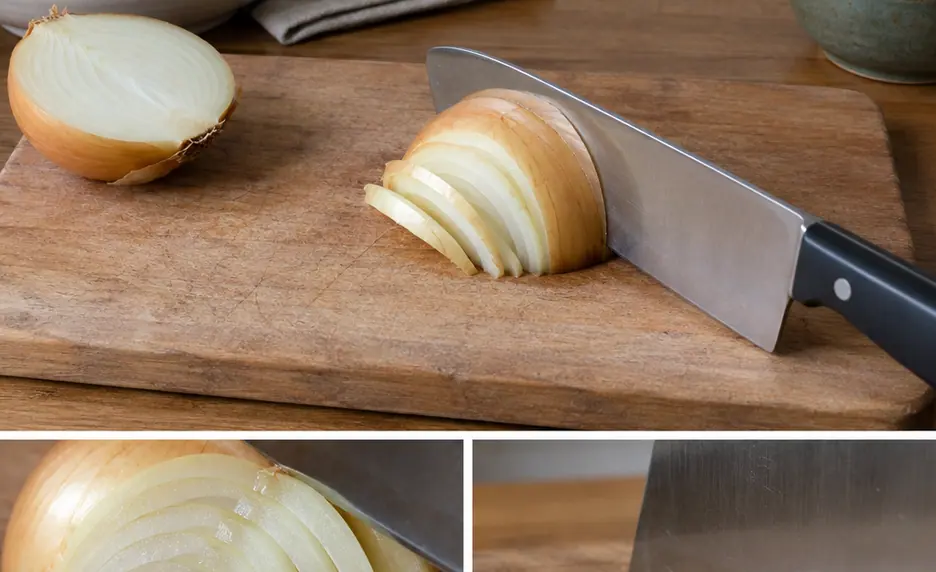
At the pot: follow a short circle
Once the onion reaches the pot, the wooden spoon takes over. Track 2 to 4 complete circles, noticing the spoon's contact with the bottom. For a soup or lentil pot, listening to the steady simmer for 5 to 10 seconds works equally well.
Steam deserves distance. Notice it from beside the pot rather than placing a wrist or face over the rising vapor. The spoon remains the safe instrument for moving, cooling, and tasting hot food.
At the salt check: let taste answer
Add a small first pinch of salt and stir. Lift a spoonful, allow it to cool for 5 to 10 seconds, then taste before deciding on another pinch. This creates a compact sequence: salt, stir, cool, taste, decide.
Spice offers another route. As ground spice reaches warm oil, attend to the first change in scent or color for 3 to 8 seconds. Keep stirring during that window so the spice does not scorch.
Steam-Safe Attention
Keep fingertips behind the knife edge, taste hot food from a cooled spoon, and observe steam from the pot's side. Sensory focus always remains subordinate to safe movement.
Tools That Quiet the Rush Without Adding Minutes
The best ritual object may already carry knife marks or a darkened spoon bowl. Familiarity helps because the hand knows what to expect from its weight, texture, and reach.
Test what is already within reach
- Press the board. Set a wooden cutting board on a dry counter and apply firm hand pressure. If it shifts, place a damp folded kitchen towel underneath before cutting.
- Feel the spoon's contact. A wooden spoon should make its path across the bottom of the pot easy to sense.
- Check the salt container. It should open or remain accessible with one hand. Place it 10 to 20 centimeters from the board on the dominant-hand side, outside the knife's working path.
- Leave the extra equipment stored. A device that must be retrieved, assembled, and washed adds preparation rather than supporting the meal already underway.
A mortar can serve the same purpose when grinding belongs to the recipe. Its weight asks for a deliberate hand, while the changing texture of the spice supplies immediate feedback.
Use one object across several dinners
Choose the board, spoon, mortar, or salt cellar and keep it in the same reachable place for 3 to 7 evening meals. That span allows the object to become familiar without turning the experiment into a long commitment.
Afterward, ask one practical question: did the tool bring attention back to the food while performing its ordinary job? If it created clutter or another cleaning task, return it to the drawer.
One-Tool Week
Use the same familiar tool for several evening meals before judging it. Repetition gives the hand a reliable place to settle.
Cues You Can Keep Beside the Cutting Board
A physical cue works best when it comes from the meal itself. A lemon half, parsley sprig, herb-rinsing bowl, or the first click of the burner can mark the beginning without adding an unrelated object to the counter.
Place the cue outside the cutting path
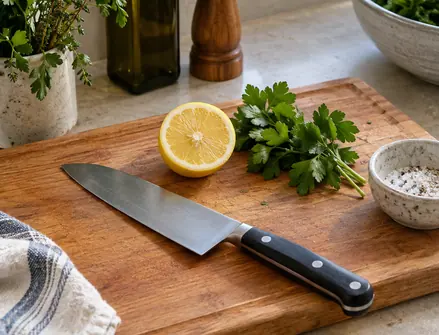
Set a lemon half, herb sprig, or rinse bowl at least one hand-width beyond the cutting zone. It stays visible there without crowding the knife. The upper corner of the board often provides a clear boundary between the cue and active preparation.
If a rinse bowl already belongs to the recipe, let the first blade wash become the signal. Rinse for 5 to 10 seconds, dry the handle, and return to the board. The wet blade never needs to become a safety distraction.
Return once, then keep cooking
Attention often jumps ahead to the table, the dishes, or the rest of the evening. When that happens, return once to the chosen cue. See the parsley. Hear the burner. Smell the spice while stirring. Then continue with the recipe.
This restrained return keeps the ritual rooted in the body without asking the cook to monitor attention continuously. The cue stays physical, brief, and native to the kitchen ritual already in progress.
Pick One Ritual That Fits Tonight's Meal
The menu makes the choice. A chopping-heavy dinner receives a knife cue. Soup receives a spoon-and-simmer cue. Curry or spiced lentils receive an aroma cue. One meal gets one primary ritual.
Match the cue to the dominant task
- For chopped vegetables: attend to the first 3 to 6 knife strokes after each new vegetable reaches the board.
- For soup or lentils: listen during the first 5 to 15 seconds after lowering the pot to a steady simmer.
- For a spice-forward dish: follow the first aromatic change for 3 to 8 seconds after spices enter warm oil, stirring continuously.
The limits protect dinner from becoming a performance. Collecting several practices can leave a cook tracking breath, posture, knife sound, steam, spice, and timing while also managing heat. A single cue leaves room for the actual work of cooking.
Remove anything that asks for a separate setup
A weeknight ritual belongs inside the recipe's existing steps. Discard it if it adds minutes, requires special equipment, or extends preparation beyond the meal. This rule keeps the practice honest.
The onion-board-spoon-salt sequence offers a useful model: first layers for the eyes, a few pot circles for the hand, one cooled spoonful for the tongue. A given dinner may emphasize only one of those points. The rest can remain ordinary cooking.
One Onion, One Pot, One Ordinary Tuesday
Late light reaches a maple board. A woman sets down one yellow onion while lentils warm in a single pot. The wooden spoon rests beside the stove, and the salt container stands within reach of her dominant hand.
She starts cutting. For several strokes, her eyes follow the onion's first layers as they separate. The knife meets the wood, her guiding fingertips tucked behind its edge. Then she continues at her usual pace.
At the stove, she draws three slow circles through the lentils with the wooden spoon. Spice enters warm oil, and she follows its opening scent while the spoon keeps moving. She adds one pinch of salt, stirs, and cools a spoonful before tasting.
The final adjustment goes into the pot. A bowl reaches the table with no extra time added to the clock, while the onion skin and wooden spoon remain on the counter in the fading Tuesday light.