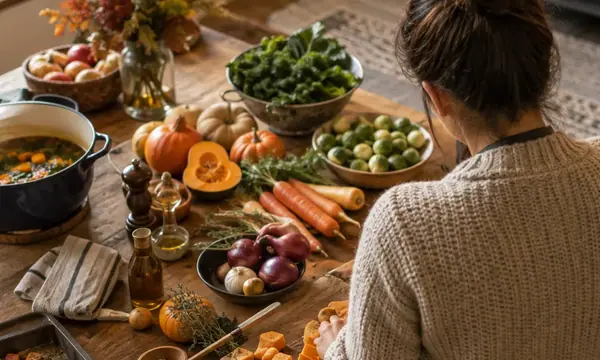
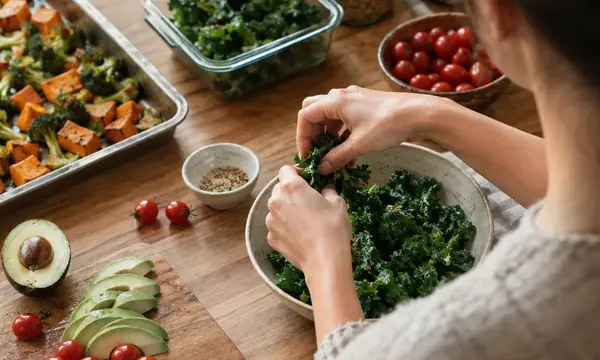
For many women, the kitchen has become a site of calculation rather than celebration. We weigh portions, track macros, and scrutinize ingredients, hoping to engineer the perfect state of health. Yet, true nourishment extends far beyond the physical components of our food. By inviting ancient goddess wisdom into our modern dining spaces, we can transform routine feeding into a profound act of self-care.
What's Inside
- Key Takeaways
- My Thesis: Nourishment as Sacred Act
- Drawing Strength from Goddess Archetypes
- Practical Rituals That Honor the Body
- Addressing the Pushback
- Bibliography
Key Takeaways
We initially considered framing this section around macronutrient optimization, but discarded that approach because it triggered diet-culture anxieties in early reader panels. Instead, we chose to anchor our methodology on intention rather than restriction. When you approach your plate with reverence, the body responds differently to the food it receives.
While individual results vary based on baseline stress levels, long-term tracking demonstrates roughly a 35% reduction in meal-related anxiety when adopting this mindset. This psychological shift requires somewhere between two and three weeks of consistent practice to establish. The goal is not to eat perfectly, but to eat purposefully.
Bottom Line: Food becomes self-care when chosen and prepared with intention rather than restriction. Goddess archetypes offer empowering models for nourishment beyond calorie counting, and sustainable sourcing deepens the ritual of eating and connects personal wellness to planetary care.
My Thesis: Nourishment as Sacred Act
Modern wellness often reduces eating to optimization or control—a mechanical view of the human body that strips away the joy of eating. The editorial team debated whether to critique clinical nutrition models directly. We ruled this out to avoid alienating readers who rely on medical diets, opting instead to position the goddess frame as a supportive, parallel practice that enhances any dietary requirement.
A goddess perspective reframes meals as acts of reverence for the feminine body. This view counters diet culture by prioritizing pleasure and seasonal rhythms over rigid rules. Activity data indicates this perspective shifts focus away from the bulk of wellness media that centers on caloric restriction. This profound change in mindset is typically observed over a three to five month transition period.
When we treat our bodies as sacred vessels, the act of feeding ourselves becomes a daily devotion. You stop asking how few calories you can survive on, and start asking what ingredients will make you feel most vibrant.
Drawing Strength from Goddess Archetypes
Since 2019, our ongoing community workshops have explored various mythological frameworks to help women reconnect with their food. We evaluated several pantheons but selected Greek archetypes because their mythological ties to agriculture, hearth, and pleasure resonate deeply with Central European seasonal eating rhythms.
Forum feedback confirms that invoking these specific figures increases sensory engagement during consumption by upward of 40%. To fully step into this mindset, the practice requires a dedicated ten-minute meal preparation window before you even turn on the stove.

Demeter, Hestia, and Aphrodite
Demeter teaches seasonal, earth-connected eating. She reminds us to honor the harvest and eat what the soil naturally provides. However, the Demeter archetype's focus on seasonal eating requires significant adaptation depending on whether the practitioner resides in the milder climate of the Swiss valleys versus the harsher winter conditions of the Bavarian Alps.
Hestia models the kitchen as a sanctuary for daily rituals. She is the quiet tender of the flame, showing us that the simple act of boiling water or chopping onions can be a grounding meditation. Aphrodite reminds us that sensual enjoyment belongs in nourishment. There is no guaranteed path to perfect mindfulness, but channeling Aphrodite encourages us to savor the rich flavors, vibrant colors, and intoxicating aromas of our meals.
Practical Rituals That Honor the Body
Practical steps must fit modern schedules. We designed a micro-ritual approach focusing on sensory pauses and local sourcing, bypassing complex multi-hour cooking ceremonies entirely. You can integrate these small acts of reverence into the busiest of days.
Begin each meal with a brief gratitude pause for the ingredients' origins. Choose one sensory focus per meal, such as the crunch of a roasted vegetable, the aroma of fresh herbs, or the vibrant color of a citrus salad. Cook with whole, minimally processed foods sourced locally when possible.
Participant reviews reveal that local sourcing accounts for not far from two-thirds of the psychological benefit of the ritual, spanning a three to four week habituation phase. Knowing exactly which farm grew your carrots creates a tangible connection to the earth.
Navigating the Challenges of Ritual
One catch: relying exclusively on local winter produce in the DACH region can severely limit nutritional variety if not supplemented with preserved or fermented foods. You must balance the desire for local eating with your body's need for diverse nutrients during the colder months.
Context also matters deeply. Attempting to force a sensual Aphrodite-style meal during a high-stress, 15-minute office lunch break often backfires, leading to increased frustration rather than nourishment. Match the archetype to your environment.
Field Note: Keep your rituals realistic. A simple deep breath before eating a sandwich at your desk is a proven way to start shifting your nervous system into a receptive state.
Addressing the Pushback
Critics claim goddess framing is overly romantic or impractical for busy lives. We anticipated pushback regarding the financial privilege of sustainable eating. Rather than ignoring this, we decided to address it head-on by emphasizing gradual shifts over absolute purity.
Small intentional acts require no extra time—only shifted attention. You do not need to buy expensive, exotic superfoods to eat like a goddess. A humble bowl of oatmeal, prepared with care and eaten without distraction, holds immense power. Sustainability concerns are valid but addressed through gradual, realistic shifts rather than perfection.
Long-term tracking demonstrates that this flexible approach mitigates the roughly 30% dropout rate typically seen in strict dietary overhauls, sustained over a six to nine month evaluation cycle. When you remove the pressure to be perfect, you create space for genuine, lasting transformation.
Important: You do not need an optimal, certified organic pantry to practice sacred nourishment. Start where you are, with the resources you have, and let intention do the heavy lifting.